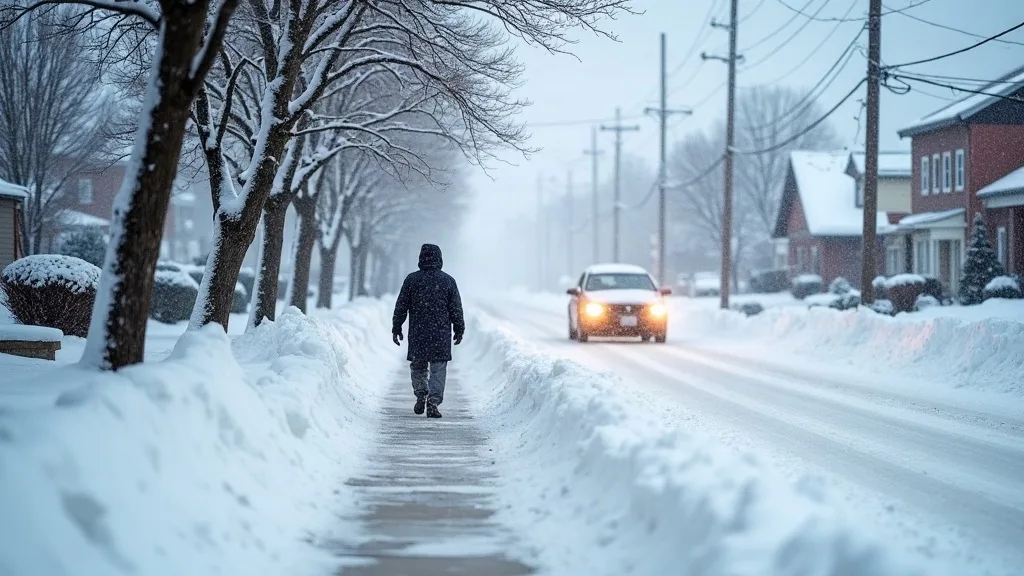
 Illustration
Are we ready for another North Country winter?
From heating bills and snow tires to lake-effect storms and the first big snowfall, Northern New York is getting ready for another winter. But how prepared are we really?
There's a moment every fall in the North Country when you realize winter isn't nearly as far away as you'd like to believe.
Maybe it's the first morning you scrape frost off the windshield. Maybe it's the sound of a neighbor firing up the woodstove. Or perhaps it's walking into a local hardware store and noticing that the snow shovels have replaced the lawn chairs.
Whatever the signal, the message is always the same: winter is coming.
And if you've lived in Jefferson, Lewis or St. Lawrence County long enough, you know that winter in Northern New York isn't just another season. It's practically a way of life.
From Watertown and Carthage to Lowville, Gouverneur, Canton and the communities along the St. Lawrence River, residents are once again preparing for months of cold temperatures, unpredictable snowfall, slippery roads and the familiar question: just how bad is this winter going to be?
What kind of winter can the North Country expect?
That's the question everyone wants answered, and it's also one of the hardest to predict.
Northern New York sits in a unique position when it comes to winter weather. Lake Ontario can produce intense lake-effect snow, sometimes dropping significant amounts on one community while another town just a short drive away sees considerably less.
Anyone who has driven from Watertown toward the Tug Hill region during a snowstorm knows how quickly conditions can change. A manageable winter afternoon can turn into whiteout conditions in a matter of miles.
The National Oceanic and Atmospheric Administration (NOAA) will release its official 2026-2027 U.S. Winter Outlook on Thursday, Oct. 15. The outlook covers December through February, and NOAA says it will address the impact of a very strong El Niño on the season.
Seasonal outlooks aren't predictions of individual snowstorms, though. Even a winter that averages warmer than normal can bring periods of extreme cold and significant lake-effect snow. And for North Country residents, it often takes just one major storm to remind everyone who's really in charge.
What do the almanacs say about this winter?
No North Country winter conversation is complete without the almanacs, and this year the two best-known ones don't quite agree.
The Farmers' Almanac is calling for a winter of sharp contrasts, summed up as "snow, sleet, and surprises." For the Northeast, it says inland areas may see several rounds of heavy, wet snow, particularly in January and February, while the Great Lakes region could see near-normal temperatures broken up by fast-moving clippers, sudden cold snaps and snow squalls.
The Old Farmer's Almanac, a separate publication, sees a tougher winter for the Capital Region, with below-normal temperatures and above-normal snowfall. But for much of the North Country, its outlook is the reverse: warmer than normal, with below-normal snowfall.
Almanac forecasts are long-range predictions made months ahead and aren't based on the same methods as the National Weather Service. Take them with a grain of road salt, and keep the snowblower gassed up either way.
How much will it cost to stay warm this winter?
For many households, the bigger concern may not be how much snow falls, but how much it costs to keep the house warm.
Across Northern New York, residents heat with natural gas, propane, heating oil, electricity, wood and wood pellets. For homeowners with older houses, drafty windows or less efficient heating systems, the winter months can put real pressure on household budgets.
And heating is only part of the equation. There's snow removal, vehicle maintenance, winter tires, and sometimes the unexpected expense of repairing a furnace or replacing a failing water heater in the middle of January. For families already watching grocery bills, preparing for winter can feel like one more financial challenge.
When does HEAP heating assistance open in Jefferson, Lewis and St. Lawrence counties?
New York's Home Energy Assistance Program, known as HEAP, helps eligible households pay for heat. The state has not yet announced a statewide opening date for the 2026-2027 regular benefit. Some counties are planning for early November, but dates can slip: last season the regular benefit didn't open until Dec. 1, 2025, after a federal funding delay.
Applications can be made online at myBenefits.ny.gov or through your county Department of Social Services. In Jefferson County, new HEAP applicants can call 315-785-3229 (the Department of Social Services is at 250 Arsenal St., Watertown). In Lewis County, call Social Services in Lowville at 315-376-5400; residents 60 and older are asked to call the Lewis County Office for the Aging at 315-376-5313. St. Lawrence County residents apply through the Department of Social Services in Canton.
Applying as soon as the program opens, rather than waiting for the first serious cold snap, can make an important difference.
How should North Country drivers get ready for winter?
There's something almost predictable about the North Country's annual winter preparations. Snowblowers that haven't run since March are dragged out of garages. Snowplow contractors begin filling their schedules. People check their tires and try to remember where they put the ice scraper.
And someone, somewhere, is already insisting we're in for the worst winter in years. Whether that prediction comes from a forecast, an old farmer's almanac or a conversation at the local diner, winter speculation is practically a regional pastime.
But beneath the humor is a serious reality: winter driving in Northern New York requires preparation. Snow tires can provide an important advantage on icy roads and in heavy snow. Check batteries, wiper blades, antifreeze, lights and tire condition before temperatures drop.
Keep a blanket, flashlight, phone charger, warm clothing and basic emergency supplies in the vehicle, especially if you regularly travel rural routes. And while local highway departments and plow crews do remarkable work keeping roads open, even the most experienced drivers know there are times when the smartest decision is simply staying home.
What should you do if the power goes out in a winter storm?
Heavy snow, ice and strong winds can bring another winter challenge: power outages. In rural parts of Jefferson, Lewis and St. Lawrence counties, an extended outage can be more than an inconvenience. For households that depend on electric heat, well pumps or medical equipment, losing power can quickly become serious.
Check your emergency supplies, test smoke and carbon monoxide detectors, and think through how you'll stay warm if the lights go out.
Generators can provide backup power, but they must run outdoors and well away from windows, doors and air intakes because of the danger of carbon monoxide poisoning. Have furnaces, boilers, fireplaces and woodstoves inspected before the heating season begins.
It's the kind of preparation that doesn't feel exciting in October. But when the temperature drops below zero and the power goes out, being prepared suddenly matters a great deal.
Who keeps the North Country moving all winter?
There's another side to winter that deserves recognition. Behind every major snowstorm is an enormous amount of work most people rarely see.
Highway crews head out long before sunrise. Utility workers respond to outages in brutal conditions. Emergency responders travel roads everyone else is told to avoid. Farmers still have animals to feed, whatever the weather. Delivery drivers, health care workers and countless others keep showing up when conditions are far from ideal.
And in many North Country communities, neighbors still help neighbors. Someone plows an elderly resident's driveway. A friend drops off firewood. A family checks on someone living alone. A stranger helps push a stuck car out of the snow.
These small acts rarely make headlines, but they're part of what makes life in Northern New York special. Winter has a way of reminding us how much we depend on one another.
What makes a North Country winter special?
For all the complaints about snowbanks, frozen windshields and heating bills, there's a reason winter remains such a memorable part of life here.
There's the quiet of a fresh snowfall before the plows arrive. Snow-covered fields stretching across the countryside. The frozen landscapes of the Thousand Islands and the St. Lawrence River. The excitement of kids hoping for a snow day. And those clear winter mornings when the trees are covered in frost and the whole North Country looks like a postcard.
Living in Northern New York takes a certain resilience. You learn to plan ahead, adapt to changing conditions, and sometimes laugh at the weather because there's not much else you can do about it. And somehow, every year, we get through it.
So, are we ready?
The calendar still says October. There's time to service the furnace, check the snowblower, replace worn tires, fill the woodshed and get ready for whatever winter brings.
But experienced North Country residents know the season doesn't always wait for the calendar. One day the leaves are still falling; the next, you're brushing snow off the car.
Whether the winter of 2026-2027 turns out snowy, bitterly cold, mild or a little of everything remains to be seen. One thing is certain: the North Country has been through plenty of winters before, and we'll make it through another one. Hopefully with a working snowblower, a full tank of heating fuel, and a neighbor who's willing to lend a hand.
Are you ready for another North Country winter?
0 votes · tap to vote
What kind of winter do you think we're in for?
0 votes · tap to vote
Common questions
- When does NOAA release its 2026-2027 winter outlook?
- NOAA's National Weather Service releases the 2026-2027 U.S. Winter Outlook on Thursday, Oct. 15, 2026. It covers December through February and will address the impact of a very strong El Niño on the season.
- Does a mild winter outlook mean less lake-effect snow in the North Country?
- Not necessarily. Seasonal outlooks describe broad temperature and precipitation trends, not individual storms. Even a winter that averages warmer than normal can bring bitter cold snaps and heavy lake-effect snow off Lake Ontario, especially toward Tug Hill.
- What does the Farmers' Almanac predict for the North Country this winter?
- The two almanacs differ. The Farmers' Almanac expects a winter of contrasts, with several rounds of heavy, wet snow inland in the Northeast in January and February and sudden squalls and cold snaps around the Great Lakes. The Old Farmer's Almanac says much of the North Country may be warmer than normal with below-normal snowfall, even as the Capital Region turns colder and snowier.
- When can I apply for HEAP in Jefferson, Lewis or St. Lawrence County?
- New York has not announced a statewide 2026-2027 opening date yet. Some counties expect early November, but last season the regular benefit opened Dec. 1, 2025, after a federal funding delay. Apply online at myBenefits.ny.gov or through your county Department of Social Services as soon as it opens.
- Who do I call about heating assistance in Jefferson County?
- New HEAP applicants in Jefferson County can call the Department of Social Services at 315-785-3229. The department is at 250 Arsenal St. in Watertown.
- Who do I call about heating assistance in Lewis County?
- Call Lewis County Social Services in Lowville at 315-376-5400. Residents 60 and older are asked to call the Lewis County Office for the Aging at 315-376-5313 to schedule an appointment.
- Is it safe to run a generator in the garage during a power outage?
- No. Generators must run outdoors and well away from windows, doors and air intakes. Running one in a garage, basement or near the house can cause deadly carbon monoxide poisoning. Keep working carbon monoxide detectors in the home.
- What should I keep in my car for a North Country winter?
- A blanket, flashlight, phone charger, warm clothing and basic emergency supplies, plus an ice scraper. It matters most if you regularly drive rural routes or toward Tug Hill, where conditions can change to whiteouts within a few miles.
More from ClickNNY
Tell us what we missed
Know something North Country readers should hear about this? Send the ClickNNY desk a local tip, a correction or a photo.