 Illustration
Fort Drum ERDS: How the Army manages excess equipment
The Army’s Equipment Redistribution and Divestiture Site program helps units redistribute or turn in excess equipment, including a Fort Drum operation that processed 16,426 pieces from April through June 2026.
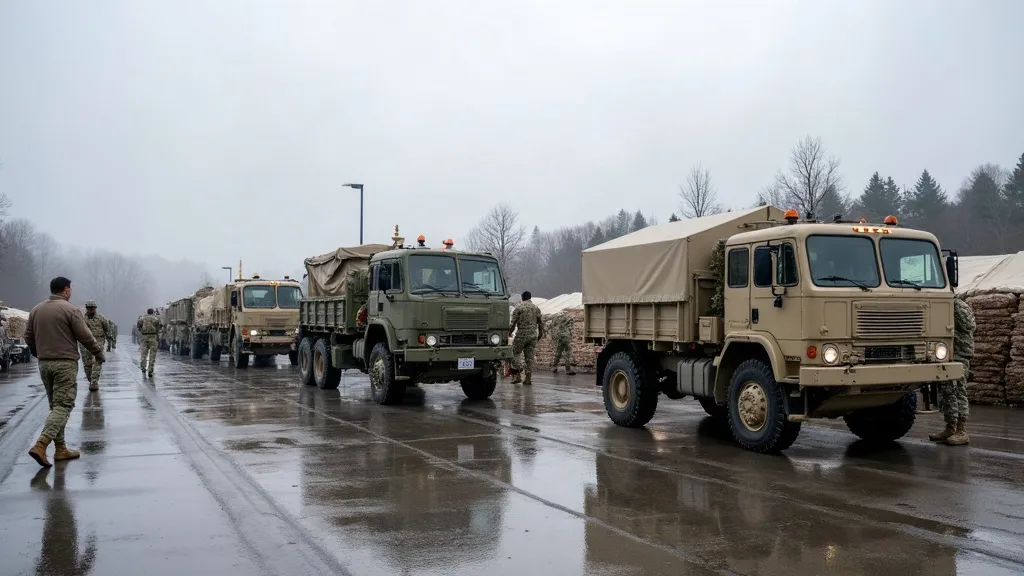
The Army’s Equipment Redistribution and Divestiture Site program helps units redistribute or turn in excess equipment so they can focus on their core missions. At Fort Drum, the 10th Mountain Division and Army Field Support Battalion-Drum used a mobile ERDS team from April through June 2026 to process 16,426 pieces of equipment, the highest volume recorded through a mobile team at that time.
What is ERDS?
ERDS is an Army Materiel Command program that uses temporary sites and mobile teams to help Army units assess, redistribute or divest equipment. A dedicated team sets up a site and aims to clear equipment from a unit’s property records within one business day of turn-in.
The program supports units affected by the Army Transformation Initiative and helps reduce the administrative burden associated with excess or legacy equipment. It replaced older approaches known as Redistribution and Retrograde of Equipment and Modernization Displacement and Repair Sites in some respects.
How did the Fort Drum operation work?
The Fort Drum mobile ERDS operation helped the 10th Mountain Division turn in 16,426 pieces of excess equipment between April and June 2026. The division and Army Field Support Battalion-Drum worked together and used lessons from other ERDS locations.
The operation included equipment from five participating brigades and more than 100 companies. The Army described the Fort Drum total as the largest volume handled by a mobile ERDS team.
Why does ERDS matter to Fort Drum and Northern New York?
For Fort Drum, the program provides an Army logistics service for military units during force-structure changes and modernization. It is not a public program for civilians, and the operation was not described as a community event.
The Fort Drum operation involved the 10th Mountain Division and Army Field Support Battalion-Drum. Army officials have said other divisions can use the planning and logistics practices developed at Fort Drum as they manage excess equipment and prepare for future requirements.
Which Army locations use ERDS?
ERDS operates through permanent sites and mobile teams at Army installations. Permanent sites have been identified at Fort Bragg, Fort Carson and Fort Hood, while mobile teams travel to installations affected by ongoing Army transformation.
Army sources have also described ERDS activity at Fort Bliss and Schofield Barracks in Hawaii. National Guard and Army Reserve units within 150 miles of a mobile site may also use the service.
What happens after equipment is turned in?
After equipment reaches an ERDS site, it can be redistributed or divested through the Army’s logistics system. The goal is to remove equipment that units no longer need while maintaining property accountability and allowing soldiers to concentrate on training and operations.
Army Sustainment Command manages ERDS, and Army Materiel Command provides the enterprise-level program. Army Contracting Command–Rock Island awarded a contract for ERDS services to Akima Global Logistics on Sept. 18, 2025, describing the capability as a no-fail requirement.
Where to get help or more information
ERDS is intended for Army units and installations rather than the general public. Fort Drum information about Army Field Support Battalion-Drum is available through the official AFSBn-Drum page.
The Army’s background information on the program is available through its pages on the ERDS approach to equipment management, mobile ERDS teams and the Fort Drum operation.
Common questions
- What is ERDS?
- ERDS is an Army Materiel Command program that helps military units redistribute or turn in excess equipment. It uses permanent sites and mobile teams to support units during modernization and force-structure changes.
- How quickly can equipment be processed?
- The ERDS model aims to complete property-book relief within one business day of turn-in. The exact time can depend on the equipment and the unit’s preparation.
- How much equipment did Fort Drum process?
- The 10th Mountain Division processed 16,426 pieces of excess equipment at a Fort Drum mobile ERDS team from April through June 2026. The Army described that as the highest volume achieved by a mobile ERDS team at that time.
- Is ERDS a public service for residents of Northern New York?
- No. ERDS is an Army logistics service for military units and installations. The Fort Drum operation was connected to the 10th Mountain Division and Army Field Support Battalion-Drum.
- Which Fort Drum units worked on the ERDS operation?
- The 10th Mountain Division and Army Field Support Battalion-Drum worked together on the operation. Five brigades and more than 100 companies participated in the division’s turn-in effort.
- Where else does the Army use ERDS?
- The Army has identified permanent ERDS sites at Fort Bragg, Fort Carson and Fort Hood, along with mobile teams that travel to other installations. ERDS activity has also been described at Fort Bliss and Schofield Barracks.
- What happens to equipment after it reaches ERDS?
- Equipment may be redistributed to another unit or removed from the Army’s inventory through divestiture. The process is intended to improve accountability and reduce the burden of managing equipment that units no longer need.
More from ClickNNY
ClickNNY Guide · Fort Drum
North Country winter driving and snow blower safety: what to know

ClickNNY Featured · Technology
Two Flaws, Millions of Websites: Inside the PHP Emergency and Why the Web Keeps Ending Up Here

ClickNNY Guide · Other
Teen driver safety in St. Lawrence County: rules and tips for families
Tell us what we missed
Know something North Country readers should hear about this? Send the ClickNNY desk a local tip, a correction or a photo.