
Record $6.4 Billion Crypto Heist Sends Bitcoin Tumbling. What It Means for North Country Miners and Investors
A record $6.4 billion Binance crypto heist sent Bitcoin falling. Here's what it means for Massena miners, North Country investors and digital wallets.
By Jessica Hale, ClickNNY North Country Desk
A massive security breach at Binance has shaken cryptocurrency markets worldwide, raising new questions for Bitcoin investors, digital wallet holders and mining operations in Northern New York.
NORTH COUNTRY, N.Y. — One of the largest financial thefts ever reported has sent shockwaves through the cryptocurrency industry, pushing Bitcoin below $77,000 and raising concerns about the security of digital assets.
The incident involves Binance, the world's largest cryptocurrency exchange, where an apparent security breach on Thursday, October 29, affected approximately $6.3 billion in digital assets.
Blockchain security firm Elliptic estimates that $6.43 billion was stolen, potentially making it the largest theft of its kind in history. Blockchain analysis firms including Elliptic, Chainalysis and TRM Labs say hackers linked to North Korea are the likely culprits. No government has made an official attribution, and the investigation remains ongoing.
Bitcoin fell to roughly $76,000 to $77,000 after the breach became public, and ether dropped nearly 6%. Shares of crypto-linked companies such as Coinbase also fell.
Binance and blockchain security partners have frozen about $3 billion in affected assets, mostly stablecoins, but a substantial portion remains beyond their immediate control.
How did the cryptocurrency heist happen?
Unlike a traditional bank robbery, the suspected attackers did not physically enter a financial institution.
According to Binance's preliminary findings, the breach may have originated through a compromised laptop belonging to a software operations engineer. The attacker allegedly gained access to internal infrastructure and submitted unauthorized cryptocurrency withdrawal transactions.
Binance has reported no evidence that customers' private wallet keys were exposed.
Blockchain investigators say the attackers began moving and converting stolen digital assets across cryptocurrency networks, complicating efforts to recover the money.
Stablecoin issuers, including Tether and Circle, have helped freeze affected tokens. However, other cryptocurrencies cannot be frozen as easily because they lack a central issuer with that authority.
Why this matters in the North Country
Northern New York has an unusual connection to the cryptocurrency industry.
For years, communities along the St. Lawrence River and near Lake Champlain have attracted Bitcoin-mining companies because of access to comparatively inexpensive hydroelectric power and existing industrial infrastructure.
Massena, in particular, has become a significant location for cryptocurrency mining.
North Country Colocation Services (NCCS), an affiliate of the Bitcoin company New York Digital Investment Group, known as NYDIG, has operated computing infrastructure associated with Bitcoin mining in Massena since 2017.
On Oct. 15, Alcoa disclosed an agreement to sell portions of its idle Massena East smelter property to a data center developer for up to $315 million. Alcoa expects $50 million to $65 million at closing, with the rest tied to data center capacity added over the following seven years. The sale is expected to close within about six months, subject to regulatory approvals and permits.
Alcoa has not named the buyer. Trade publication Data Center Dynamics reports that NYDIG had been in advanced talks for the site.
The development is part of a broader effort to transform former industrial properties into large computing facilities.
Could the crypto crash affect Massena mining operations?
Potentially, although the effects would be economic rather than a direct consequence of the security breach.
Bitcoin mining involves specialized computers that help secure the Bitcoin network and earn Bitcoin rewards. Mining companies generally depend on several factors to remain profitable, including the market price of Bitcoin, electricity costs, equipment efficiency and network competition.
When Bitcoin prices decline, the dollar value of mining rewards also falls.
For example, a mining operation earning one Bitcoin would see the market value of that reward decrease by $10,000 if Bitcoin fell from $90,000 to $80,000.
A prolonged decline could place pressure on operators with higher electricity or financing costs.
However, there is an important distinction: A security breach at Binance does not mean Bitcoin-mining computers in Massena were hacked.
There is no verified evidence in the reporting reviewed for this story that North Country mining facilities participated in the attack or suffered a direct compromise.
North Country mining operations are already changing
The cryptocurrency industry's volatility comes as local operators consider expanding beyond traditional Bitcoin mining.
NCCS describes plans to develop modern computing and artificial intelligence infrastructure at its Massena campus, eventually replacing existing on-site Bitcoin mining operations.
The proposed expansion includes two new data halls and would make use of existing industrial infrastructure and hydroelectric power.
The company says the project remains subject to environmental reviews and permitting.
The distinction matters because AI computing facilities may generate revenue by providing processing capacity to customers rather than relying directly on Bitcoin mining rewards.
ClickNNY recently reported on Massena's consideration of zoning and regulatory changes as the community evaluates proposed large-scale data center development.
That debate involves potential economic development, electricity demand, land use and the future of former industrial properties.
Plattsburgh has faced similar questions
Massena is not the only North Country community with a history of cryptocurrency mining.
Plattsburgh attracted national attention in 2018 when city officials imposed a temporary moratorium on new cryptocurrency mining operations amid concerns about electricity consumption and costs.
This year, the Common Council has considered a proposed 12-month moratorium on new cryptocurrency mining, blockchain validation, AI and large data center facilities that would use 300 kilowatts or more. City officials have said a single large data center could use close to half of the city's roughly 105 megawatts of electricity. ClickNNY could not confirm whether the council has adopted the measure.
The discussions reflect a broader question for communities with access to relatively inexpensive electricity: How can they attract emerging technology businesses while protecting local infrastructure and residential utility customers?
A major downturn in cryptocurrency prices could add another layer of uncertainty to those decisions, particularly for projects that depend heavily on Bitcoin mining revenue.
What about North Country residents who own cryptocurrency?
For local residents who own Bitcoin, Ethereum or other digital currencies, the most immediate concern may be the value of their holdings rather than the possibility that their personal wallets were compromised.
There are several important distinctions:
- Bitcoin owners: The market decline reduces the dollar value of Bitcoin holdings, even for investors who never used Binance.
- Exchange customers: People keeping cryptocurrency on an exchange depend on that company's security, reserves and ability to process withdrawals.
- Private wallet holders: Cryptocurrency stored in a properly secured self-custody wallet is not automatically exposed because another company's exchange was hacked.
- Local miners: Mining operations may face lower revenue when Bitcoin prices decline, but that does not mean their mining equipment or wallets have been breached.
Binance said Friday evening that it had set aside more than $6.34 billion to cover the affected assets and committed to absorbing the losses rather than passing them on to customers.
The company also said withdrawals remained temporarily suspended while additional security checks continued. It was targeting a phased restoration of withdrawal services, possibly as soon as this weekend, and planned to publish a full proof-of-reserves report by Monday, November 2.
Should local cryptocurrency owners be worried?
The incident serves as a reminder that cryptocurrency investors face two different types of risk: sudden changes in market value and the security of the services used to hold their assets.
Residents who use cryptocurrency exchanges should monitor official company announcements, enable multifactor authentication and be cautious of unsolicited messages claiming to offer account recovery or compensation.
Anyone using a private cryptocurrency wallet should protect their recovery phrase and never provide it to someone claiming to represent an exchange or technical support service.
A falling cryptocurrency price does not necessarily mean an individual's wallet has been compromised.
What happens next?
Investigators are continuing to trace the stolen assets, while Binance works to restore withdrawals and demonstrate that it can cover customer balances.
For Northern New York, the longer-term question may be what the latest cryptocurrency disruption means for an industry that has already helped reshape conversations about economic development and energy use.
Massena's proposed computing expansion and Plattsburgh's regulatory discussions show that the region remains connected to the future of digital infrastructure, whether through Bitcoin mining, artificial intelligence or other high-powered computing operations.
There is currently no verified direct connection between the Binance heist and North Country cryptocurrency businesses.
But as the market reacts to a multibillion-dollar security breach, local miners, investors and communities considering new computing developments have reason to pay attention.
Reported by ClickNNY and reviewed by an editor before publication.
More from ClickNNY
Guides and features from across the North Country.

ClickNNY Election 2026 · Showdown in Jefferson County
Ousted by his own party, still on the ballot: inside Jefferson County’s three-way fight for power
Knocked off his own party's line in June, an incumbent refuses to quit. A 24-year legislator faces his first opponent in years. And a challenger vows to break up a board with no Democrats. Here's who is fighting for your vote on Nov. 3.
ClickNNY Guide · Community
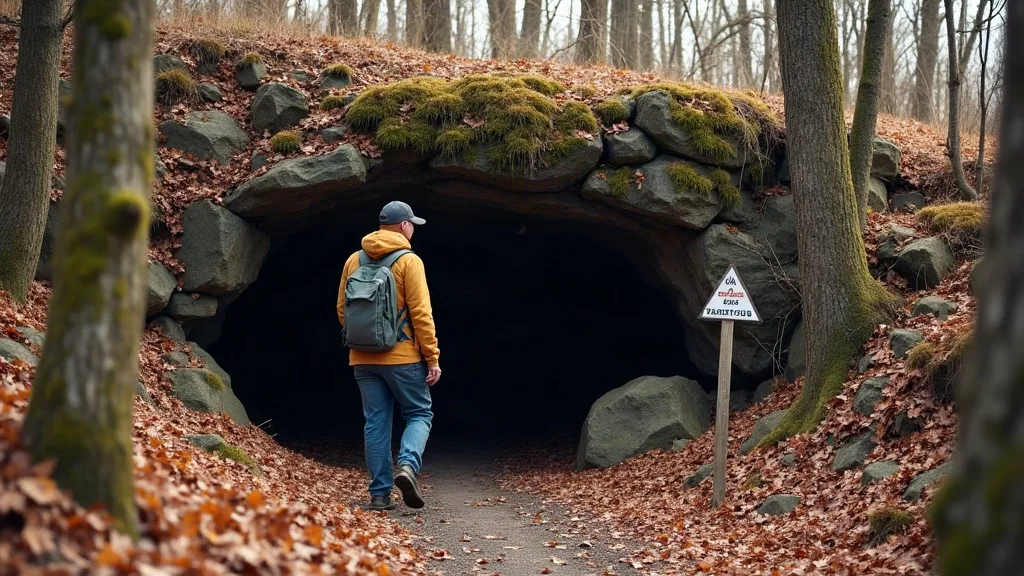
Protecting hibernating bats in St. Lawrence County: what to know
New York residents, including those in St. Lawrence County, can help protect hibernating bats by avoiding restricted caves and mines, limiting tree removal during the winter, and using trained wildlife professionals for bats in homes.

ClickNNY Special Report · Technology
The Good. The Bad. The Rogue.
AI agents are here, working for us, being used against us and, it appears, sometimes doing what nobody told them to. What it means for North Country jobs, money and privacy, and what is still unanswered.