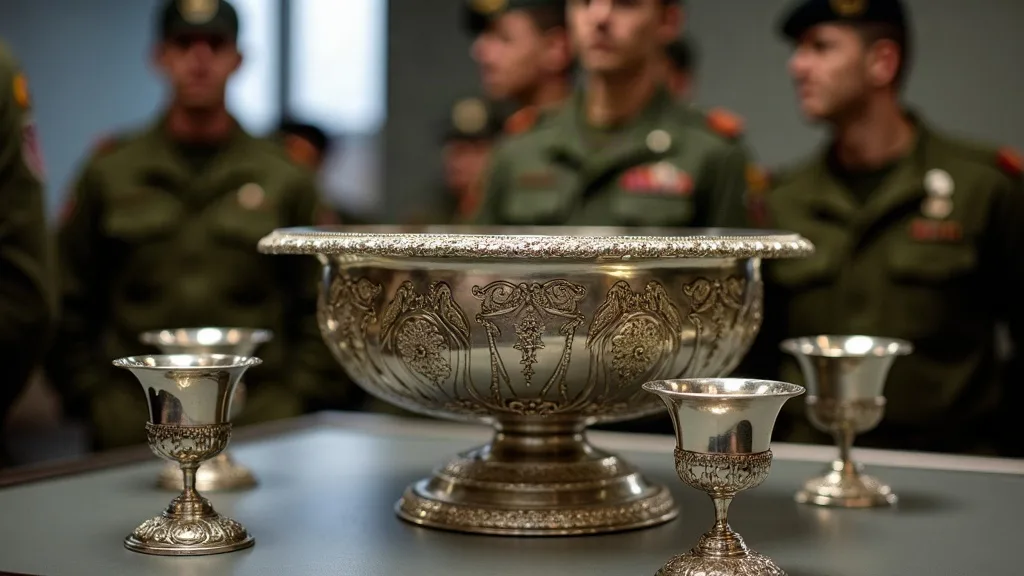
Fort Drum’s Shanghai Bowl carries a century of Polar Bear history
The Shanghai Bowl, a silver bowl and cup set held by Fort Drum’s 4th Battalion, 31st Infantry, was made in Shanghai in 1932 and later buried on Corregidor during World War II before being recovered.
By Nolan Briggs, ClickNNY Fort Drum Desk
A rare silver bowl and cup set kept by Fort Drum’s 4th Battalion, 31st Infantry, connects the unit’s soldiers to nearly a century of military history. Known as the Shanghai Bowl, the set is displayed at the battalion headquarters and brought out only for special occasions, according to Army historical accounts.
The bowl and cups were made in Shanghai in 1932. Officers of the 31st Infantry collected silver coins, which a Shanghai silversmith melted down to create the set, according to the Army Historical Foundation and Army records.
During World War II, the set was buried on a hillside on Corregidor in the Philippines to keep it from Japanese forces. Captain Earl Short and his unit were taken prisoner days later, according to historical accounts. After the war, Short returned to Corregidor on orders from Maj. Gen. George C. Marshall, and the bowl was recovered after about two months of digging.
The bowl remained overseas for decades before the Army brought it to the United States in 1987, according to Fold3. It is about 30 inches across and 21 inches deep. The set has continued to be associated with the 31st Infantry, including through engraved cups connected to officers and organizations within the regiment.
The regiment’s Polar Bear nickname comes from its service in Siberia from 1918 to 1920. The 4th Battalion, 31st Infantry is part of the 2nd Brigade Combat Team of the 10th Mountain Division, which is based at Fort Drum in Northern New York. Fort Drum is about 30 miles from Canada and hosts reunions attended by 31st Infantry veterans.
The bowl’s history also includes the regiment’s wartime captivity. More than 1,000 soldiers of the 31st Infantry died in captivity, according to the Army Historical Foundation. The bowl serves as a physical link between those earlier soldiers and the service members who now belong to the regiment at Fort Drum.
The Shanghai Bowl is expected to remain a rarely displayed piece of the unit’s history. Information about any future viewing or ceremony would come from the 4th Battalion, 31st Infantry or Fort Drum Public Affairs.
This was submitted by a ClickNNY user and has not been independently verified by ClickNNY.com editorial.
Reported by ClickNNY and reviewed by an editor before publication.
More from ClickNNY
Guides and features from across the North Country.

ClickNNY Guide · Fort Drum
Fall foliage on Fort Drum and in the North Country: what to know
Fall color is on display across Fort Drum and the North Country, with recreation access rules, trail information and seasonal updates available for visitors.

ClickNNY Guide · Thousand Islands
Fishing the St. Lawrence River after summer: a fall and ice fishing guide to the Thousand Islands
When the tour boats leave, the St. Lawrence becomes a different river. Here's what's biting in the fall, how ice fishing works, exactly what to bring, how to stay safe, and where to stay, whether you're visiting for the first time or have lived here all your life.

ClickNNY Guide · Fort Drum
Your first North Country winter: a survival guide for Fort Drum soldiers from the South
Never driven on snow, owned a snow blower or felt a February morning at Fort Drum? Here's what to wear, what to keep in your car and how to get through your first lake-effect winter.