 Illustration
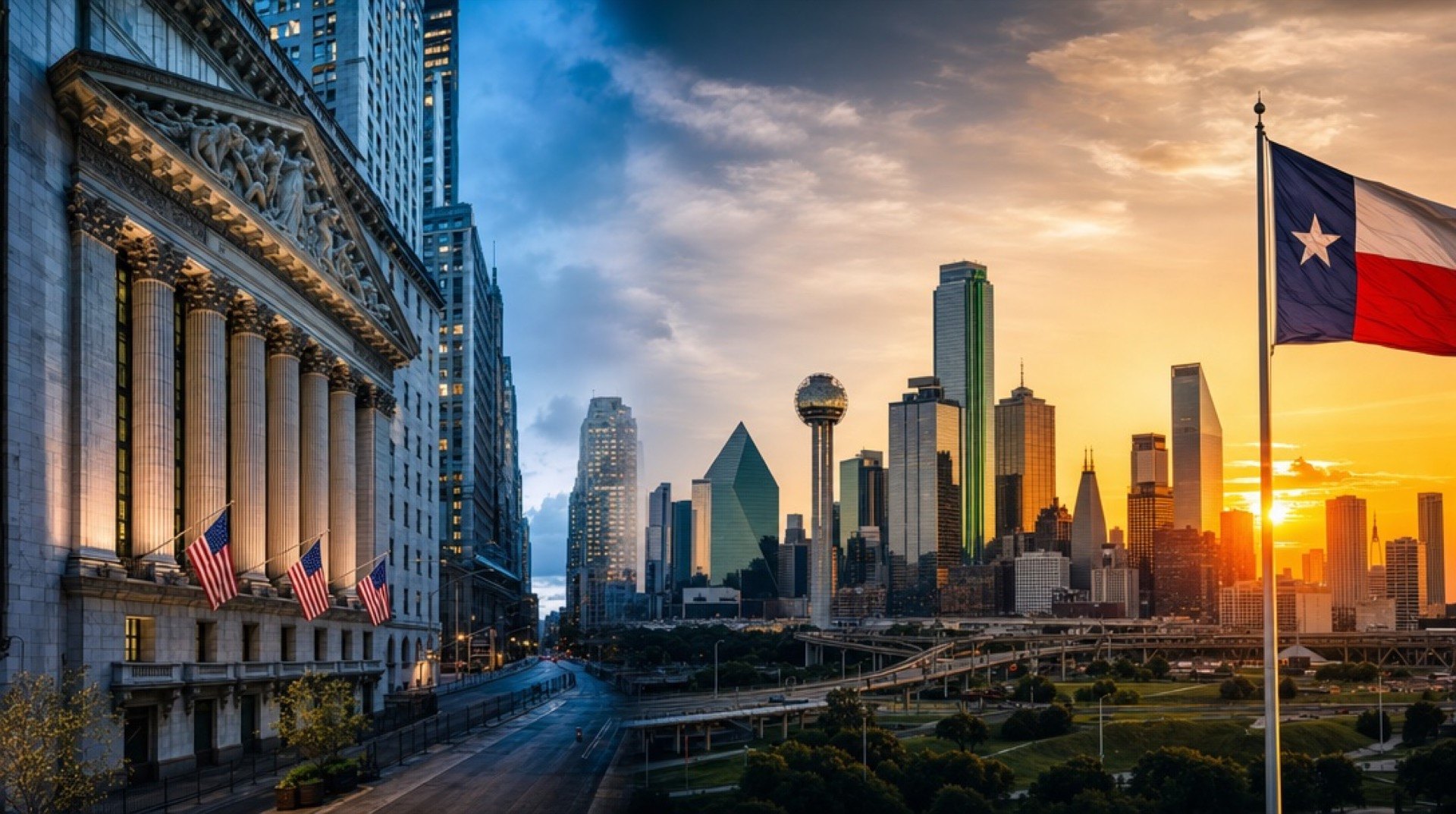
The NYSE went to Texas. Has New York lost its green?
Most people missed it: Wall Street opened shop in Dallas, big banks are following, and New York City elected a mayor who wants to tax the rich. Here's what it all means, in plain English, for schools, taxes and banks in Northern New York.
Here's a piece of news most people in the North Country never heard: the New York Stock Exchange opened in Texas.
It happened on March 31, 2025, in Dallas. There was no ribbon on Wall Street and no big story on the evening news up here. The company that owns the NYSE simply moved one of its smaller exchanges to Texas and renamed it NYSE Texas. Within a year, more than 100 companies had signed on. Nasdaq followed with Nasdaq Texas in March 2026. And this summer a brand-new, Texas-built exchange, the Texas Stock Exchange, started trading. On Oct. 5, the first big companies moved their main stock listings there from New York.
At the same time, some of the biggest banks on Wall Street have been building huge offices in Dallas, and New York City elected a mayor, Zohran Mamdani, who campaigned on raising taxes on millionaires and corporations.
So it's fair to ask: has New York lost its green? And why should anyone in Watertown, Lowville or Massena care where a stock trades or where a banker sits? The short answer is that a big share of the money that pays for North Country schools, hospitals and roads starts as taxes on Wall Street paychecks. ClickNNY went through the public record to explain what has actually changed, what hasn't, and what it could mean here.
 Illustration
What actually moved to Texas
A stock exchange is a marketplace where shares of companies are bought and sold. Today almost all of that happens on computers, in a split second. When a company is "listed" on an exchange, it pays that exchange a fee and agrees to its rules, and its shares trade there.
NYSE Texas and Nasdaq Texas are mostly second addresses. Companies like Trump Media, J.B. Hunt and Huntington Bancshares kept their main listing in New York and added a Texas one, a bit like a business that keeps its headquarters but opens a branch office. SpaceX, the year's biggest stock offering, listed in June on Nasdaq's main market and Nasdaq Texas at the same time.
The Texas Stock Exchange (TXSE) is different. It's a new, independent exchange approved by federal regulators in September 2025 and backed by BlackRock, Citadel Securities, JPMorgan, Charles Schwab and others, with $430 million raised so far. It wants companies to make Texas their primary home. On Oct. 5, Energy Transfer, Sunoco, SunocoCorp and USA Compression Partners, worth nearly $100 billion together, moved their main listings there from the NYSE. Dillard's followed. Some of those early movers have ties to the exchange: Energy Transfer's chairman, Kelcy Warren, is a large investor in TXSE's parent company.
"Real competition for primary listings is here, and it is here to stay," said TXSE chief executive James Lee.
Still, keep the scale in mind. On Oct. 30, the Texas Stock Exchange handled about 0.2% of all U.S. stock trading, according to Cboe market data. The NYSE's exchanges handled about 20% and Nasdaq's about 15%. TXSE says its first IPOs won't come until 2027.
The jobs are what matter
Where a stock is listed matters less to New York than where the people work. Exchanges don't employ many people. Banks and investment firms do, and their paychecks are taxed.
Here the Texas trend is real. In his April 2026 letter to shareholders, JPMorgan Chase chief executive Jamie Dimon said the bank had 24,000 employees in New York City, down from 30,000 a decade ago, and 32,000 in Texas, and that the shift "will likely continue." He wrote that New York "has the highest city and state corporate taxes and the highest individual income and state taxes."
Goldman Sachs is building a $500 million, 800,000-square-foot Dallas campus with room for more than 5,000 workers, set to open in 2028. In September, Morgan Stanley chose Dallas for a hub with 1,500 jobs by 2031 and more than 3,800 by 2035, helped by more than $62 million in state and city incentives. The Partnership for New York City, a business group, reported that Texas passed New York in finance jobs in 2024, 519,000 to 507,000, not counting insurance and real estate.
Some of the moves are tied directly to New York City politics. Billionaire Ken Griffin, whose firm Citadel has a major New York presence, said in May that "we will add far more jobs in Miami over the next decade" after Mayor Mamdani used Griffin's Manhattan penthouse as the backdrop for a video promoting a tax on luxury second homes. Note the destination there: Florida, not Texas. Investment firm Apollo Global Management has said it expects most of its future hiring to happen in a second hub outside Manhattan, but it didn't blame taxes or the mayor.
 Illustration
But New York isn't broke. Not even close.
Here's the part that gets left out of a lot of the coverage. By the numbers, Wall Street is having one of the best stretches in its history, in New York.
State Comptroller Thomas DiNapoli reported on Oct. 6 that New York City securities jobs hit 207,400 in 2025, the most since tracking began in 2000, and are on pace to grow again this year. Wall Street firms earned a record $65.1 billion in 2025 and $45.9 billion in just the first half of 2026, up 51%. The average Wall Street paycheck, bonus included, was $561,770.
Manhattan office leasing climbed early this year, American Express announced a new Lower Manhattan headquarters, and Bank of America signed a 20-year New York office commitment. "It just hasn't shown up in the numbers," economist James Parrott told NY1 in May about the predicted exodus.
So the honest answer is: New York hasn't lost its green. It's losing its monopoly. For a century, if you wanted to be in big finance, you had to be in Manhattan. That's no longer true, and the growth that used to happen only in New York is now being split with Dallas, Miami and other places.
What Mamdani asked for, and what Albany actually did
Zohran Mamdani took office as New York City's mayor in January. He asked the state for two big tax increases: an extra 2% income tax on city residents earning more than $1 million, and raising the top state corporate tax rate from 7.25% to 11.5%. His campaign estimated they would raise about $9 billion a year. The libertarian Cato Institute said the corporate piece would bring in much less.
A lot of people assume those taxes went into effect. They didn't. City taxes like that need approval from Albany, and the state budget Gov. Kathy Hochul signed on May 28 included neither one. Lawmakers did extend existing, "temporary" higher corporate tax rates for three more years, through 2029. They added a new yearly surcharge on New York City second homes worth $5 million or more, which the governor's office says will raise at least $500 million a year for the city. And they sent out $1 billion in energy rebate checks of $100 to $200 and cut state tax on up to $25,000 in tips.
In the city itself, the Rent Guidelines Board, whose members the mayor appoints, voted in June to freeze rents on about 1 million stabilized apartments, and the city started a first phase of free child care for 2-year-olds. Free city buses, a signature campaign promise, won't happen this year, the mayor told Politico in April.
"Our tax system is fundamentally broken," Mamdani has said, calling higher taxes on corporations and the wealthy "the most sustainable and fairest" option. Business groups and budget watchdogs warn that the people and companies he wants to tax are the easiest to lose.
Why a North Country family should care
New York's state budget leans on a very small group of people. According to the state Tax Department, the 99,404 filers who earned $1 million or more in 2024, less than 1% of taxpayers, paid $32 billion of the state's $72 billion income-tax bill. Wall Street alone produced $26.3 billion in state taxes last year, about one of every five dollars Albany collected.
Most of that money is earned downstate and spent statewide. A CUNY study of state finances found New York City generated about 55% of state revenue but received about 41% of state spending. An older Rockefeller Institute study, the most recent to break out upstate on its own, found upstate paid about 24% of state taxes and received about 35% of state spending. In plain terms, Wall Street paychecks help pay for North Country schools, Medicaid and roads.
That's why the Texas story matters here. If New York keeps growing, even slowly, Albany keeps the money flowing. If high earners and the firms that pay them leave faster than they're replaced, the state has to raise other taxes, cut spending, or both. The State Comptroller has warned for years that the state's income tax is "heavily reliant on Wall Street performance" and that the volatility is "a longstanding area of concern."
 Illustration
The squeeze that's already coming
Even without a single banker leaving, Albany has a money problem ahead. The state budget office projects gaps of about $6.4 billion next year, $10.5 billion the year after and $14.7 billion the year after that, nearly $32 billion in all, according to the State Comptroller's review of the budget.
A big reason is Washington. The federal tax-and-spending law passed in 2025 shifts more of the cost of Medicaid and food assistance onto states. The Comptroller projects the state's share of Medicaid will rise $5 billion this year alone, to $48.2 billion. A September 2025 white paper from a North Country health coalition estimated the federal changes could cost Jefferson County about $107 million, St. Lawrence County about $105 million and Lewis County about $26 million in Medicaid dollars through 2034. That's an advocacy estimate, not a state projection.
Meanwhile, state help for town and city governments, called AIM, has been frozen at the same statewide total. The extra local aid in this year's budget went mostly to New York City and big cities.
Here's the good news: this year, tax money is coming in $7.3 billion ahead of what the state expected through mid-year, mostly because of strong financial markets. Which is the whole point. When Wall Street is up, Albany is flush. When it's down, everybody feels it, including districts that already get the smallest raise in the state.
 Illustration
New York's other superpower: the banking license
There's a second kind of financial power that almost nobody talks about, and Texas can't easily copy it.
Most of the world's business is done in U.S. dollars. The dollar is on one side of about 89% of all foreign-currency trades, according to the Bank for International Settlements, and makes up most of the world's central-bank savings. When a company in Brazil pays a supplier in Korea in dollars, that payment usually travels through a big bank in New York. The private CHIPS system, run out of New York, settled an average of about $2 trillion a day last year.
To run a branch or bank in New York, a foreign bank needs a license, and most get one from the New York State Department of Financial Services (DFS) in Albany. DFS supervises more than 3,000 institutions holding nearly $10 trillion, including about 120 foreign banks. Banks can choose a federal license instead, but for a global bank, losing the ability to move dollars through New York can be crippling.
That gives a state regulator in Albany real reach around the world. In 2014, French bank BNP Paribas paid $8.9 billion in total penalties for moving money for sanctioned countries, including $2.24 billion to DFS, and was temporarily barred from clearing some dollar transactions. DFS has also fined Standard Chartered, Deutsche Bank, Coinbase and, this July, Sweden's Swedbank. And because New York law lets big contracts choose New York courts, lawsuits involving countries like Argentina often end up in Manhattan.
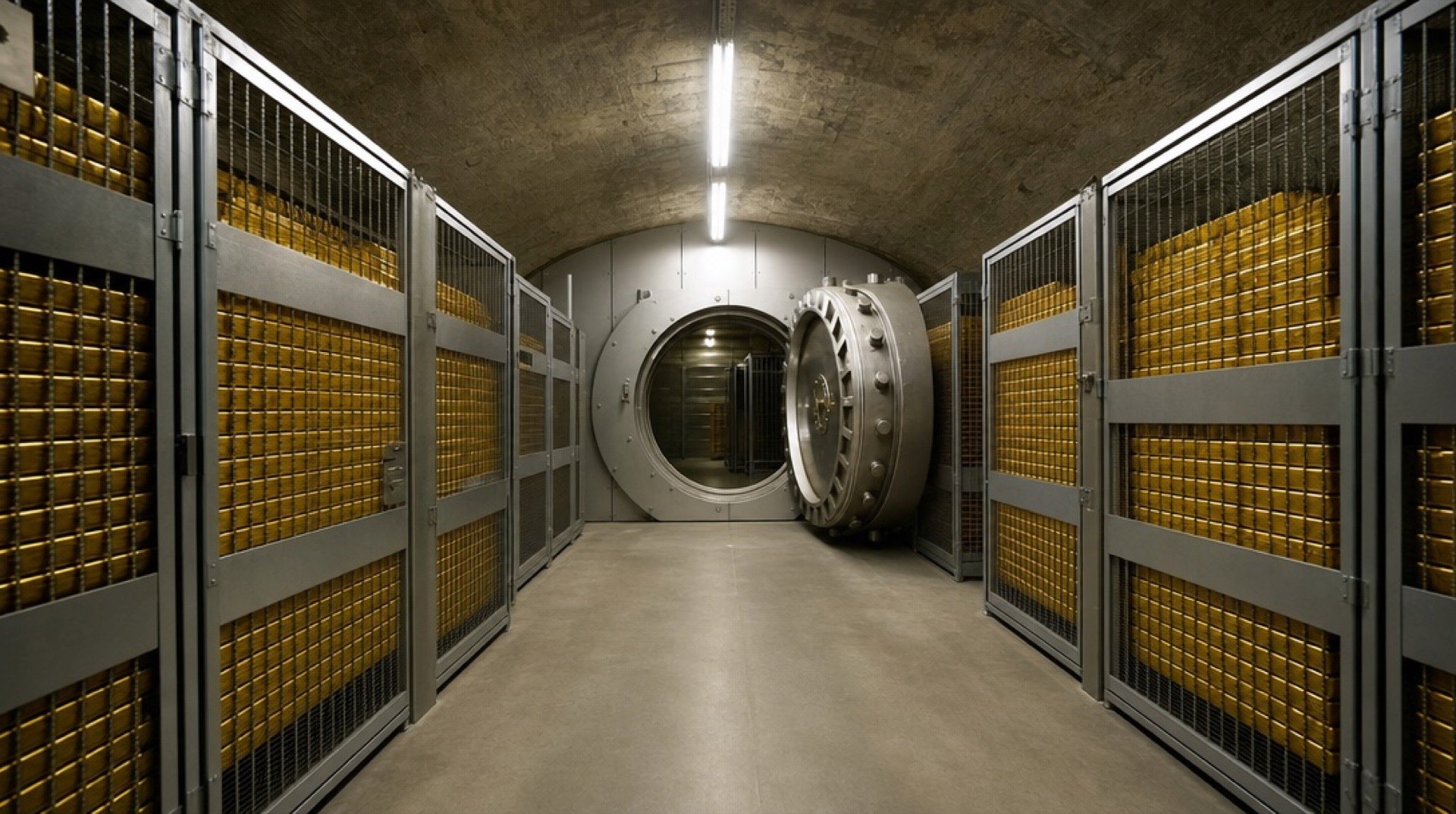
Under the Federal Reserve Bank of New York's building in Lower Manhattan sits a vault with about 6,331 metric tons of gold, nearly all of it owned by foreign countries and central banks. Moving a stock listing to Dallas doesn't move any of that.
 Illustration
Are rich New Yorkers really leaving?
Some are. Most of the evidence is older or comes from surveys. The latest IRS data, for 2022 to 2023, shows New York lost about 74,500 more tax filers than it gained, with Florida, New Jersey and North Carolina the top destinations. Texas was seventh. The State Comptroller's new migration dashboard found the net loss of filers earning $500,000 or more peaked in 2020 and has slowed to about 1 in 100 a year, still the highest rate of any income group.
Polls taken around Mamdani's election found many wealthy New Yorkers saying they were thinking about leaving. Thinking about it isn't the same as moving, and so far ClickNNY found no hard data showing a millionaire exodus in 2026. Brokers reported more $4 million-plus Manhattan home sales in November 2025 than a year earlier. The real test will be the tax data for 2026, which won't be public until 2027 or later.
Did you know the New York Stock Exchange had opened in Texas?
0 votes · tap to vote
Questions readers are asking
- Did the New York Stock Exchange move to Texas?
- No. The NYSE is still on Wall Street. Its parent company opened a second, all-electronic exchange in Dallas called NYSE Texas in March 2025. Most companies listed there kept their main NYSE listing in New York and added a Texas one.
- What is the Texas Stock Exchange?
- A new, independent stock exchange based in Dallas, approved by federal regulators in September 2025. It began trading in July 2026, and in October the first companies, including Energy Transfer and Dillard's, moved their main listings there from the NYSE. It handles a very small share of U.S. trading so far.
- Did Mayor Mamdani raise taxes on millionaires?
- Not yet. He asked Albany for a 2% city income tax surcharge on income over $1 million and a higher state corporate tax rate. The 2026-27 state budget included neither. It did extend existing higher corporate tax rates through 2029 and created a surcharge on New York City second homes worth $5 million or more.
- How does Wall Street affect taxes in Northern New York?
- Indirectly but heavily. Wall Street produced about 20.8% of all state tax collections last year, and New York City generates more state revenue than it receives back. That money helps pay for school aid and Medicaid statewide. North Country school districts rely on state aid for roughly half or more of their budgets.
- Does it matter to my 401(k) where a stock is listed?
- No. Your shares and their value don't depend on which exchange they trade on. The listing location matters to the exchanges and, through jobs and taxes, to the states where finance workers live and work.
- Why can a New York regulator fine foreign banks?
- Many foreign banks operate branches in New York under licenses from the state Department of Financial Services so they can move U.S. dollars through New York's payment systems. Breaking New York or federal rules can cost them those licenses, which gives Albany unusual leverage over global banks.
More from ClickNNY

ClickNNY Special Report · Aging in the North Country
The growing cost of growing old in Northern New York

ClickNNY Special Report · Preparedness
Is the end of the world coming? What it means for the North Country

ClickNNY Election 2026 · Showdown in Jefferson County
Ousted by his own party, still on the ballot: inside Jefferson County’s three-way fight for power
Tell us what we missed
Know something North Country readers should hear about this? Send the ClickNNY desk a local tip, a correction or a photo.
Editor’s note: This report is built from public records and reporting ClickNNY checked this week: NYSE, Nasdaq and Texas Stock Exchange announcements; Cboe market-volume data; the New York State Comptroller's Wall Street, budget and migration reports; the state Tax Department's income-tax and migration statistics; the Division of the Budget's 2026-27 school aid tables; district budgets; NYS Department of Financial Services enforcement records; Federal Reserve Bank of New York and Bank for International Settlements data; and coverage by CNBC, NY1, the Financial Times and others. District school-aid figures are from the governor's January proposal and district budgets, not final enacted aid runs. Where a number is an estimate from an advocacy group or think tank, we say so. Images marked as illustrations were made for this story and do not show real people or specific buildings.