ALL THINGS | A Father, a Son, and the No. 44
A Father, a Son, and the No. 44
##ALL THINGS##
A Father, a Son, and the No. 44
By September, the No. 44 didn't look out of place anymore.
That may be the simplest way to explain how far Mason Rogers had come.
A few months earlier, he was still known primarily as the remarkably young driver who had already figured out how to win Limited Sportsman races at Can-Am Speedway. Now he was strapped into a full Sportsman car, surrounded by drivers with years more experience, racing in a DIRTcar Sportsman Series event and fighting near the front.
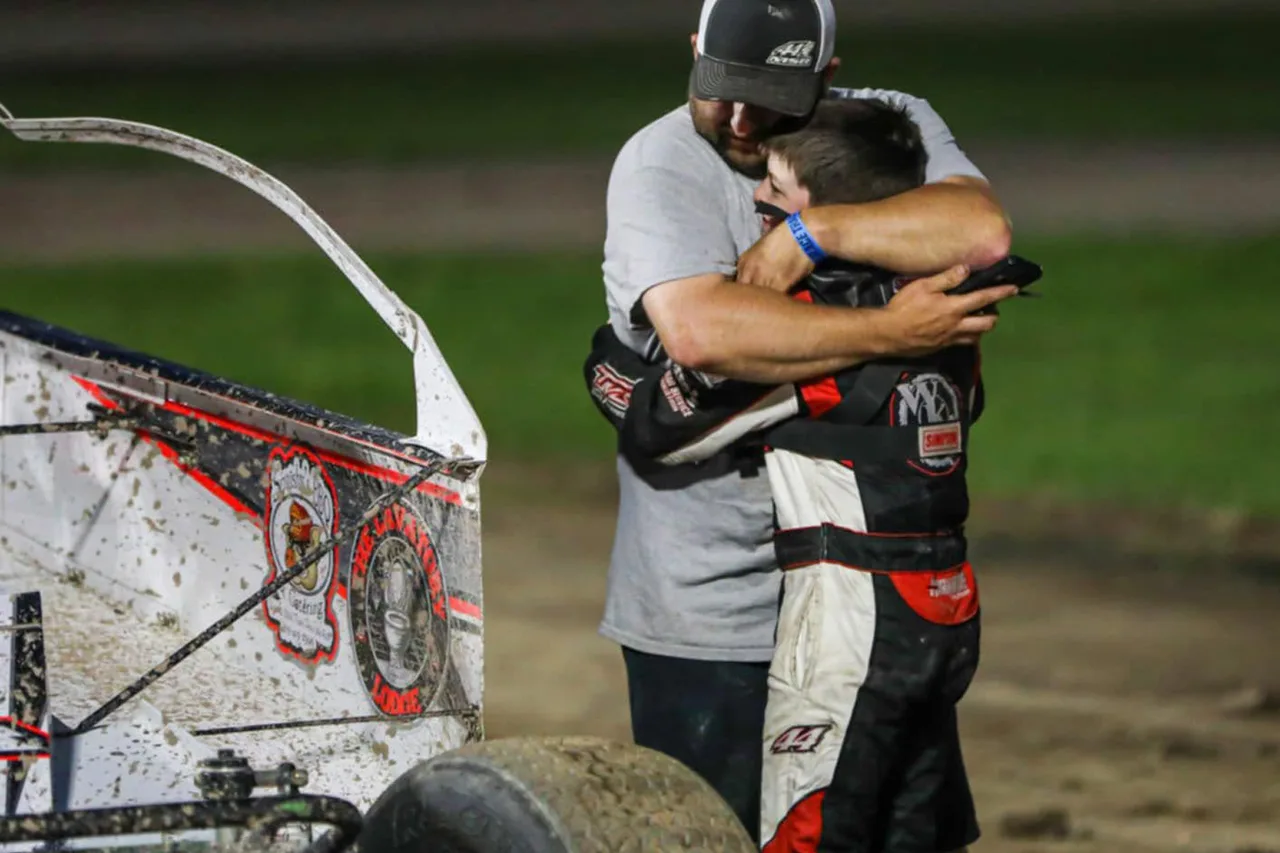
Outside the car stood his father, David Rogers.
There was a time when David would have been the one tightening the belts around himself. He knew what it was like to sit behind the wheel of a No. 44, waiting for the signal to fire the engine. He knew the nerves before a feature, the instinct required when a track changed underneath you and the feeling of knowing you had a car capable of winning.
Now his son was driving away from him.
On the side of Mason's car were two words that had followed him through the journey:
##All Things.##
They come from Philippians 4:13: “I can do all things through Christ who strengthens me.” Mason has made the verse part of his identity. Listen to his interviews and there is a good chance he'll begin by thanking his Lord and Savior before he ever mentions the race car, the crew or himself.
By the end of that September Sportsman feature at Can-Am, Mason had another reason to be thankful.
He finished third.
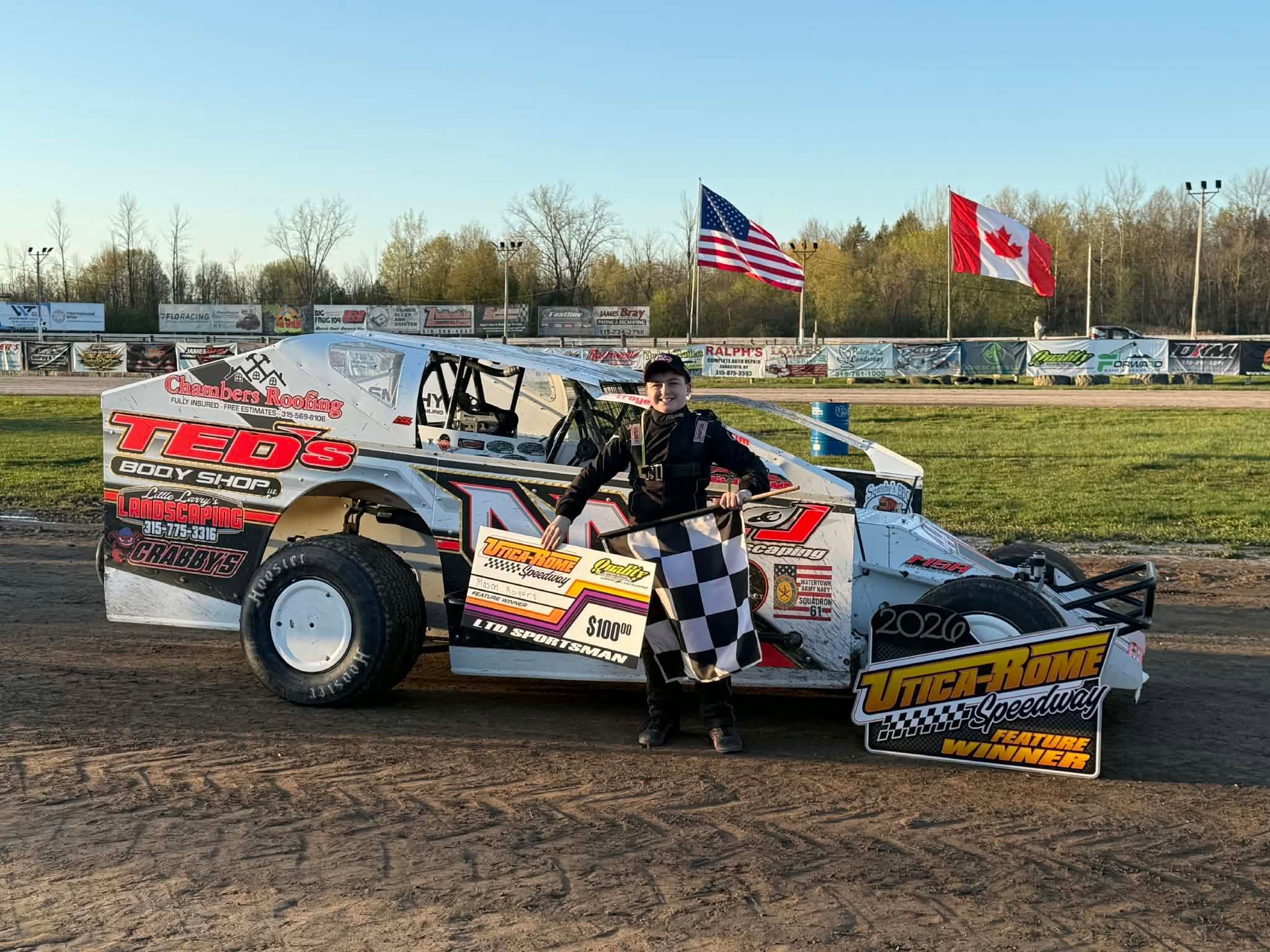
For most drivers, a third-place finish is simply another line in the results. For the Rogers family, this one carried the weight of everything that had happened before it.
To understand why, you have to go back to the first Rogers who drove the 44.
The Number Came From Somewhere
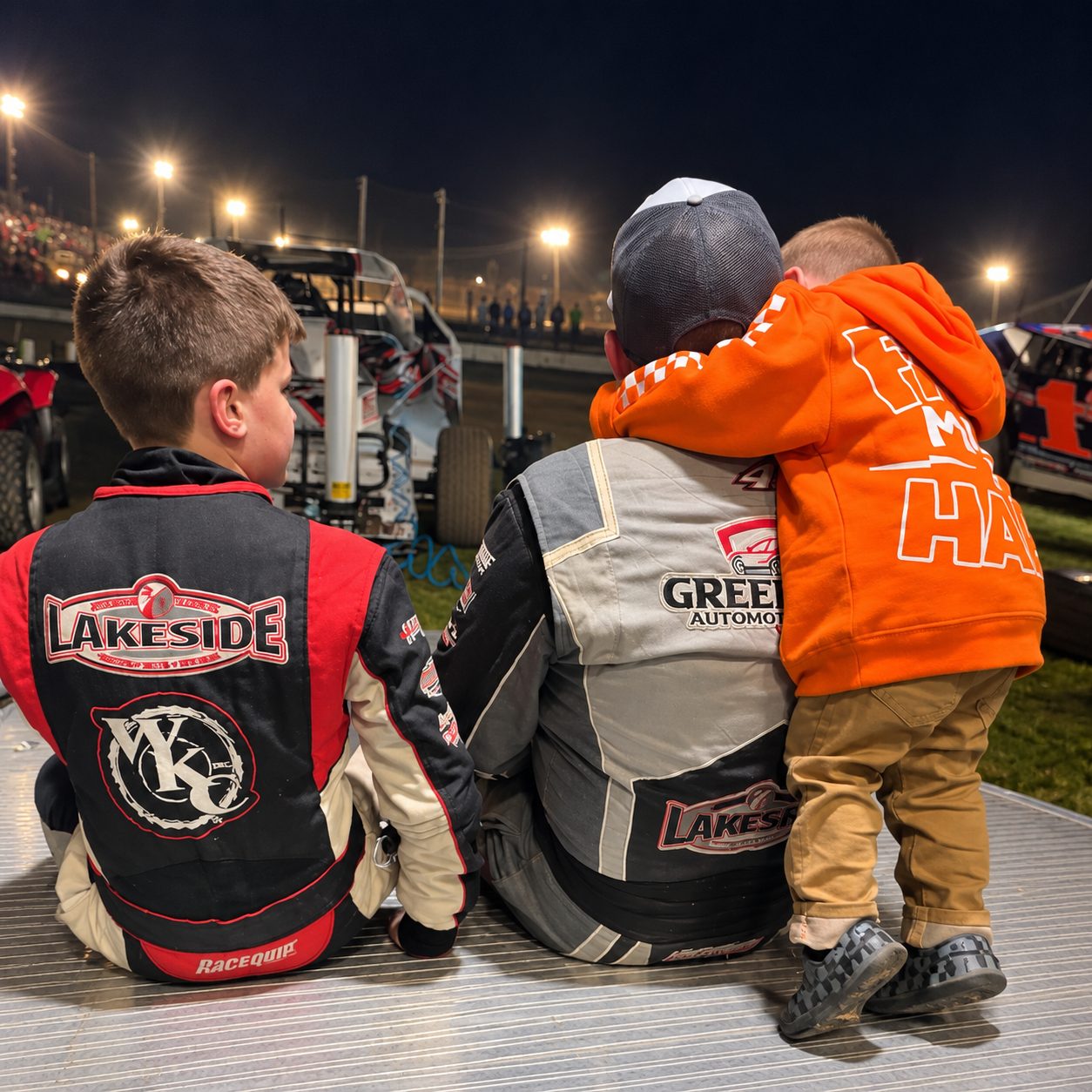
Long before Mason became one of the young drivers people were watching around the North Country, David Rogers had already built a serious racing career of his own.
David wasn't merely a father who understood cars. He understood racing because he had won at a high level. He captured the World Short Track Championship at The Dirt Track at Charlotte three times in four years, accumulated multiple DIRTcar Sportsman Series victories and won the 2023 DIRTcar Sportsman Northern Region championship. Around Can-Am, the Rogers name and the No. 44 already meant something.
He knew what it took to be successful because he had paid the price himself: the long nights in the shop, the money spent chasing speed, the repairs after something went wrong and the endless search for a setup that could turn a good race car into a winning one.
Then Mason wanted to race.
What followed wasn't simply David teaching his son how to drive. Slowly, his own place in the sport began to change.
The man who had spent years preparing his own race cars began pouring that same energy into Mason's. He bought equipment, organized the program, assembled the people around it and used everything racing had taught him to give his son a chance. The seat David once occupied became less important than the one Mason was climbing into.
There is sacrifice hidden inside that transition.
Racers don't stop loving racing simply because their children begin doing it. David enjoyed competing. He was successful at it. Yet somewhere along the way, helping Mason chase his dream became more important than continuing to chase his own in the same way.
His racing knowledge didn't disappear when he climbed out of the car.
It moved into Mason's.
And in 2025, the results began showing up.
The Kid Who Wasn't Supposed to Be There Yet
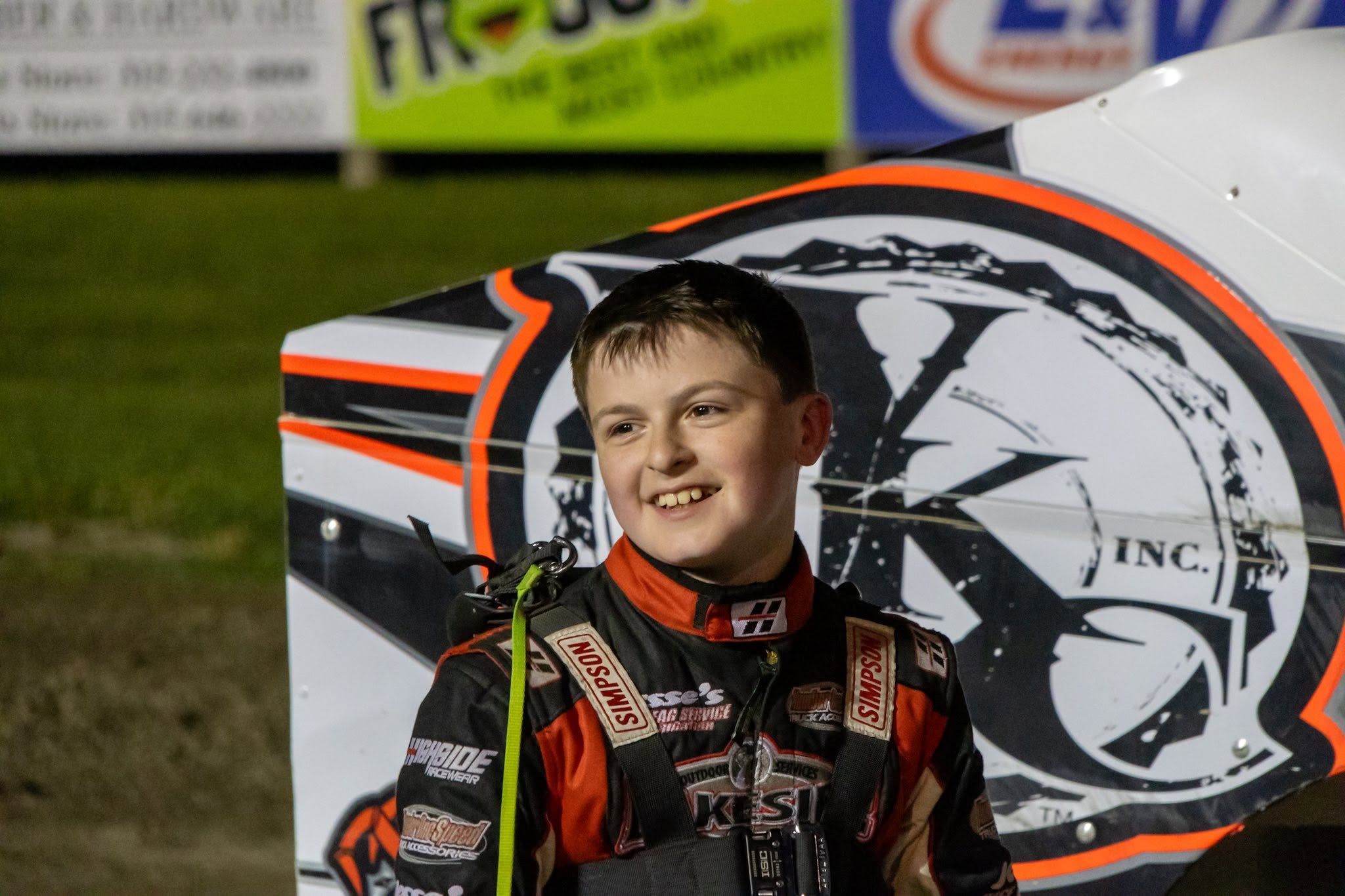
Mason was only 11 when he became the youngest feature winner in Can-Am Speedway history.
That was the kind of accomplishment that naturally drew attention. Race fans love a young prodigy, particularly when the kid is doing something that seems years ahead of schedule. It would have been easy for the story to stop there: a talented young driver, a historic night and a family with an unforgettable memory.
But Mason kept winning.
That changed the story.
One unexpected victory can be explained away as a perfect night. Continued success is harder to dismiss. By the time the No. 44 had won several times, competitors weren't wondering whether Mason could drive anymore. They were paying attention to where he was starting.
That created a different challenge for 2026.
The Rogers family could have protected what they had built. They had found a division where Mason was successful, a track he understood and a combination capable of winning.
Instead, they went looking for places where he would have to learn again.
Winning Wasn't Enough
The beginning of Mason's 2026 season made staying comfortable especially tempting.
He came out fast at Can-Am, winning repeatedly and putting together three straight victories early in the year. The No. 44 was no longer sneaking up on anyone. When it rolled onto the speedway, people expected it to be competitive.
Then the team began traveling.
Mohawk. Fulton. Utica-Rome. Weedsport.
Different tracks created different problems. Surfaces changed in unfamiliar ways. Drivers Mason hadn't raced regularly used different lines and made different decisions. Some nights the team found speed quickly. Other nights made them work for it.
That was exactly the point.
David could give Mason a good race car and years of accumulated knowledge, but experience cannot be transferred completely from one driver to another. Some things Mason had to discover himself: how a car felt in traffic, when a passing lane was about to disappear, how aggressively another driver would protect a corner and what to do when the setup wasn't quite right.
The more they traveled, the clearer the philosophy became.
They weren't looking for the easiest places to win.
They were looking for whatever would make Mason better.
Eventually, that meant putting him in a place where winning became considerably harder.
The Comfortable Part Ended
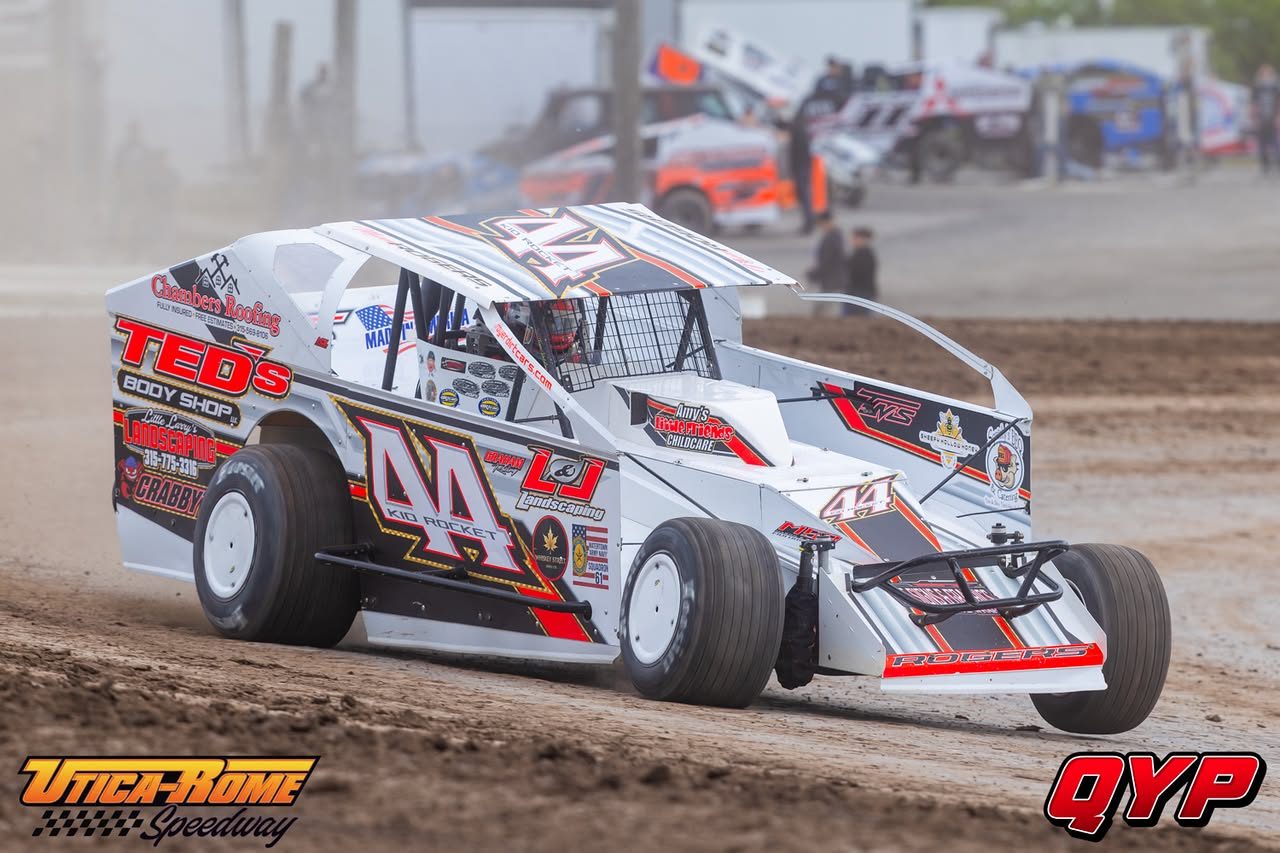
Moving into full DIRTcar Sportsman competition changed the tone of the season.
The drivers were more experienced. The fields were deeper. Mistakes became more expensive. The young racer who had spent much of the spring near the front suddenly found himself learning from people who had already spent years figuring out the division.
For perhaps the first time in a while, Mason had to become comfortable with not being the fastest car every night.
That is a difficult transition for any successful young athlete. Winning builds confidence, but the next level tests what that confidence is actually made of. If it depends entirely on trophies, struggling can destroy it. If it comes from believing you can learn, struggling becomes useful.
Mason's early Sportsman results weren't a continuation of his Limited Sportsman dominance. They were never going to be.
Instead, the improvement appeared gradually.
A better run. A few more positions. A top five. A race where he stayed with a driver who had previously driven away from him.
There was no single moment when Mason suddenly became a Sportsman driver. It happened the way most real progress happens: almost quietly, until the difference became impossible to ignore.
By late summer, the No. 44 wasn't merely gaining experience anymore.
It was beginning to run near the front.
What a Father Can and Cannot Do
David could see the progression because he had lived it.
He knew the moment when a young driver began feeling things in the car that he couldn't recognize months earlier. He could hear Mason describe what was happening in the corner and know that his son's understanding of the car was changing.
But David also understood the limit of what a father could provide.
He could prepare the car. He could choose the setup. He could spend the money, put together the crew and make sure Mason arrived at the track with everything he needed.
Then the helmet went on.
The window net came up.
And Mason drove away.
At that point, the father who had won races all over the region could do little more than watch his son make decisions at speed.
That is part of what makes the No. 44 such an important piece of this story. It isn't simply Mason's number. David carried it before him. The number connects two racing careers, but they aren't identical careers. David's experience may have created the opportunity, yet Mason still has to decide what to do with it every time the green flag falls.
By September, he was beginning to show everyone.
The Race That Changed the Question
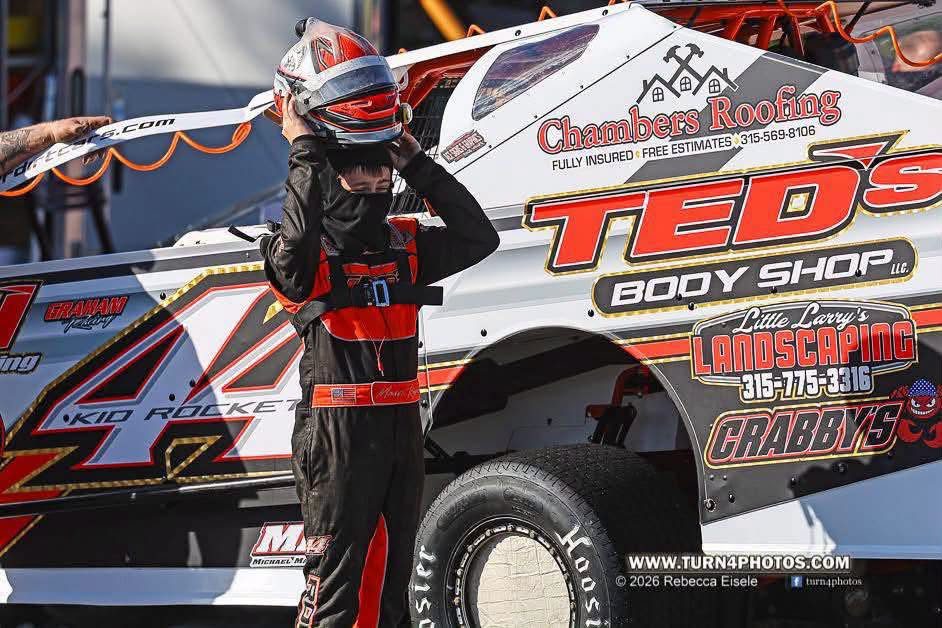
When the DIRTcar Sportsman Series arrived at Can-Am in September, Mason was surrounded by serious racers who had arrived with exactly the same objective he had.
Win.
There was nothing ceremonial about the field. Nobody was giving the young driver extra room because he was still learning. Richard Murtaugh was there. Jessica Power was there. Logan Brown was there. Drivers with far more laps in Sportsman competition were chasing the same checkered flag.
Mason finished third.
The importance wasn't simply that he stood on a podium.
It was where he had started the season.
Months earlier, Mason was still primarily a Limited Sportsman driver. Now he had raced his way onto a DIRTcar Sportsman Series podium.
The question surrounding him was beginning to change again.
First, people wondered how a kid that young could win.
Then they wondered whether he could keep winning.
Now the question was becoming much more interesting:
How far can he go?
What “All Things” Looks Like
The answer isn't written yet, which may be why the words on Mason's car fit the story so well.
“All Things” could easily be misunderstood as a promise that faith guarantees victory. Mason's season tells something more meaningful. He didn't win every race. Moving into Sportsman didn't suddenly become easy because Philippians 4:13 was written on the car.
Faith didn't eliminate the struggle.
It gave him something to carry through it.
When Mason thanks his Lord and Savior after a race, the words mean more when you realize there will be nights when there is no trophy beside him. There will be broken parts, mistakes, frustrating finishes and races where somebody else is simply better.
The verse still goes with him.
That idea reaches beyond racing.
Most people will never climb into a Sportsman car, but nearly everyone knows what it feels like to wonder whether they're capable of doing something. We tell ourselves we're too inexperienced when we're young, then somehow become convinced we're too old once enough years have passed.
Mason's story pushes against that thinking.
You begin where you are. You learn what you don't know. When one level becomes comfortable, you decide whether you're willing to make yourself uncomfortable again.
David's story carries another version of the same lesson. Dreams can change shape. Sometimes fulfillment isn't found in continuing to be the person behind the wheel. Sometimes it comes from standing outside the car, watching your son chase something you understand better than almost anyone.
Neither journey is finished.
The People Behind the 44
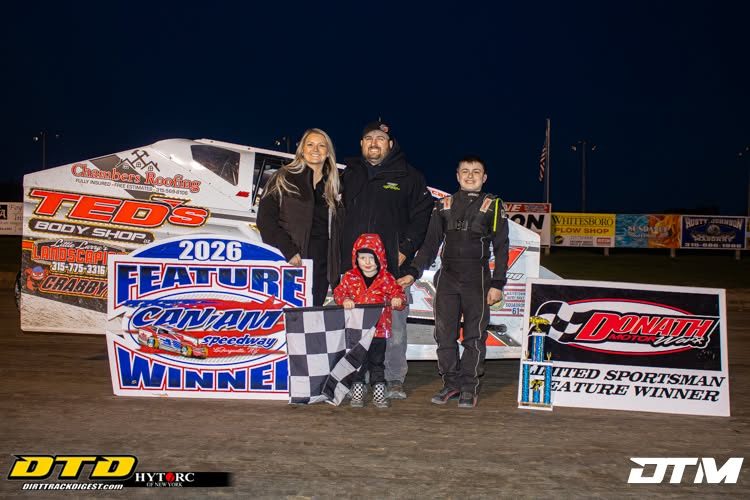
That is important because Mason Rogers has never been building this alone.
David may be the most visible person behind the program, but the effort extends through the Rogers family, Mason's mother, the pit crew and the sponsors whose names travel around the track with him. Racing consumes weekends, travel, money and enormous amounts of time that most spectators never see.
A feature race may last only a few minutes.
Getting the car there can consume an entire week.
Parts have to be purchased. Tires have to be prepared. Repairs have to be made. The trailer has to be loaded. Sponsors have to believe there is value in helping a young racer continue moving forward.
The driver receives the applause because he is the one people can see.
But every lap Mason completes carries the work of people who helped put him there.
That will matter even more when the next season begins.
The Next Green Flag
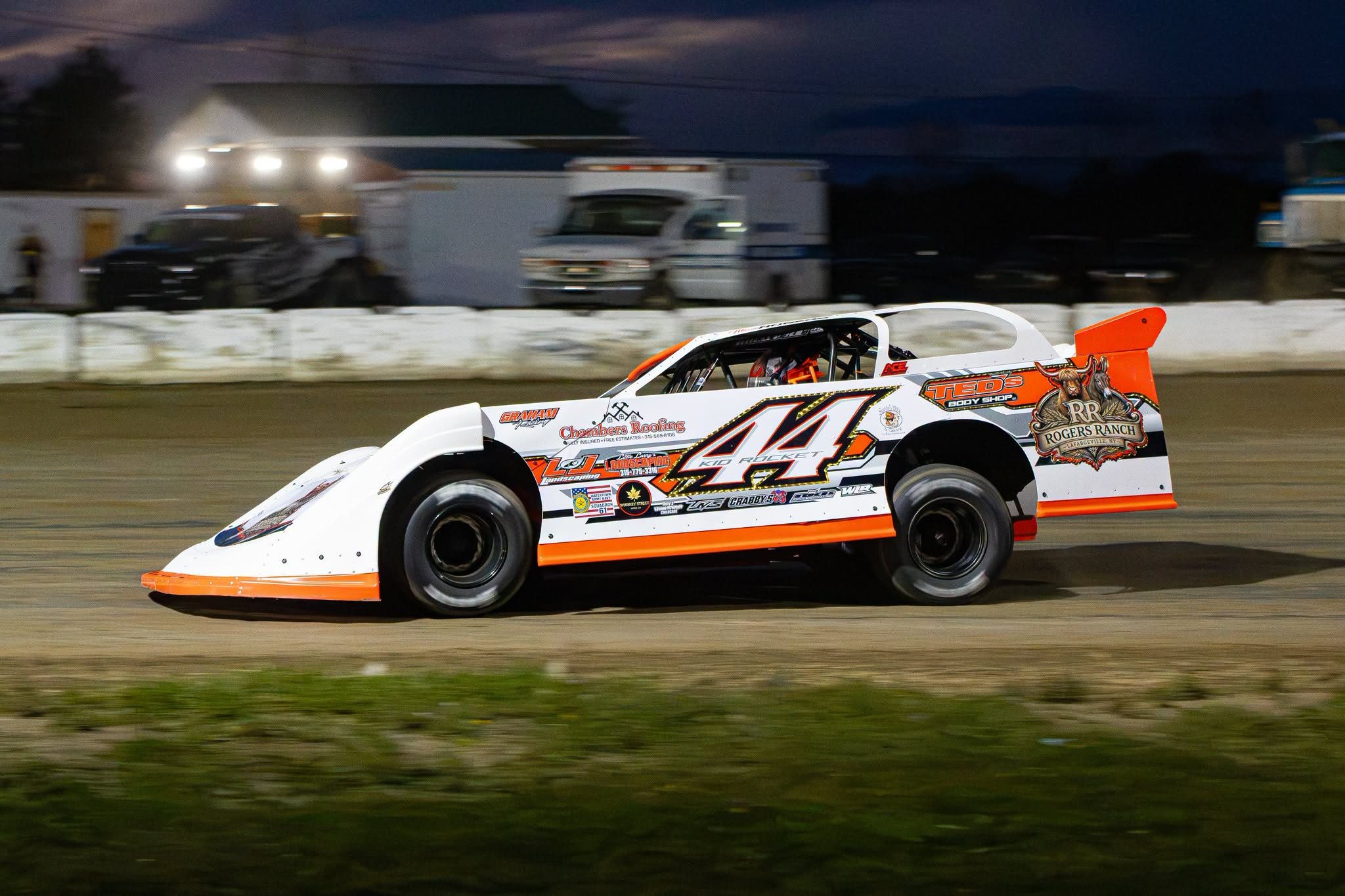
In 2027, Mason will attempt something he hasn't done before: a full season in Sportsman.
No more occasional step up.
No more treating the division primarily as a place to gain experience.
It becomes home.
Late Models will also become part of the next chapter, giving him another car to learn and another set of challenges to solve. For Mason, it means more laps and higher expectations. For David, it means another winter of preparation and another season of building the program around his son. For the family, crew and sponsors, it means the commitment grows right along with the opportunity.
Nobody knows what happens next.
That's the reason to follow it.
Maybe Mason wins immediately. Maybe the next level humbles him again before the results come. Most likely, racing will give him some of both.
Years from now, people around Can-Am may look back at these seasons differently. They may remember when Mason Rogers was still the kid everyone was talking about because of his age, when David Rogers was standing beside the car instead of inside one, and when an entire family was beginning to discover how far the No. 44 could go.
For now, the story is still being written.
The car still carries the same number.
It still carries the same two words.
All Things.
And when Mason Rogers rolls onto the speedway next season, the most interesting part won't be what he has already accomplished.
It will be what happens next.
Fans can follow Mason Rogers, the No. 44 and the next chapter of the Kid Rocket story at https://masonrogers.clicknny.com
Sponsored